
Ask for the engineering
Drawings & specifications
There is no FEMA "seal of approval" for storm shelters. FEMA publishes design standards, and engineers design to them. So ask for the engineering. Here's ours.
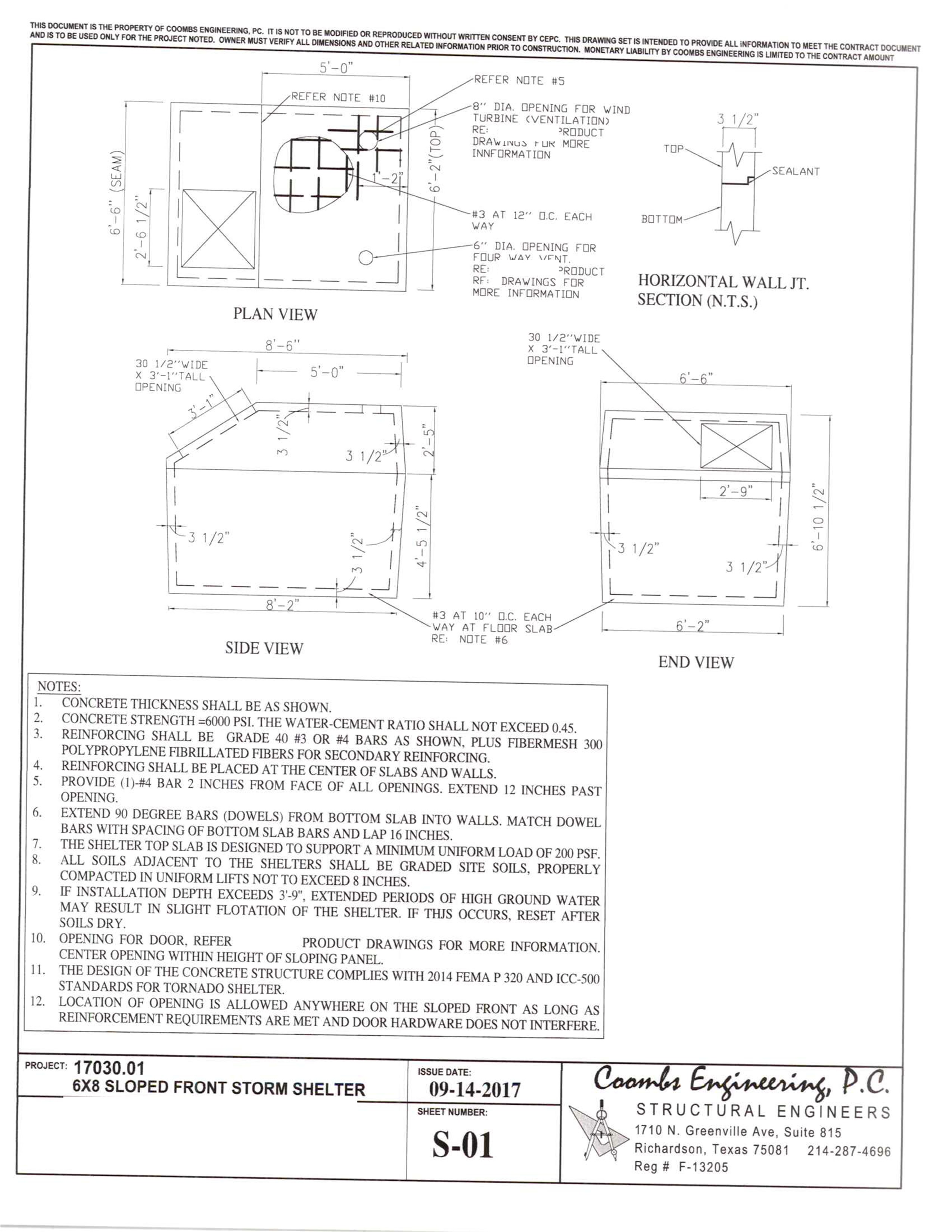
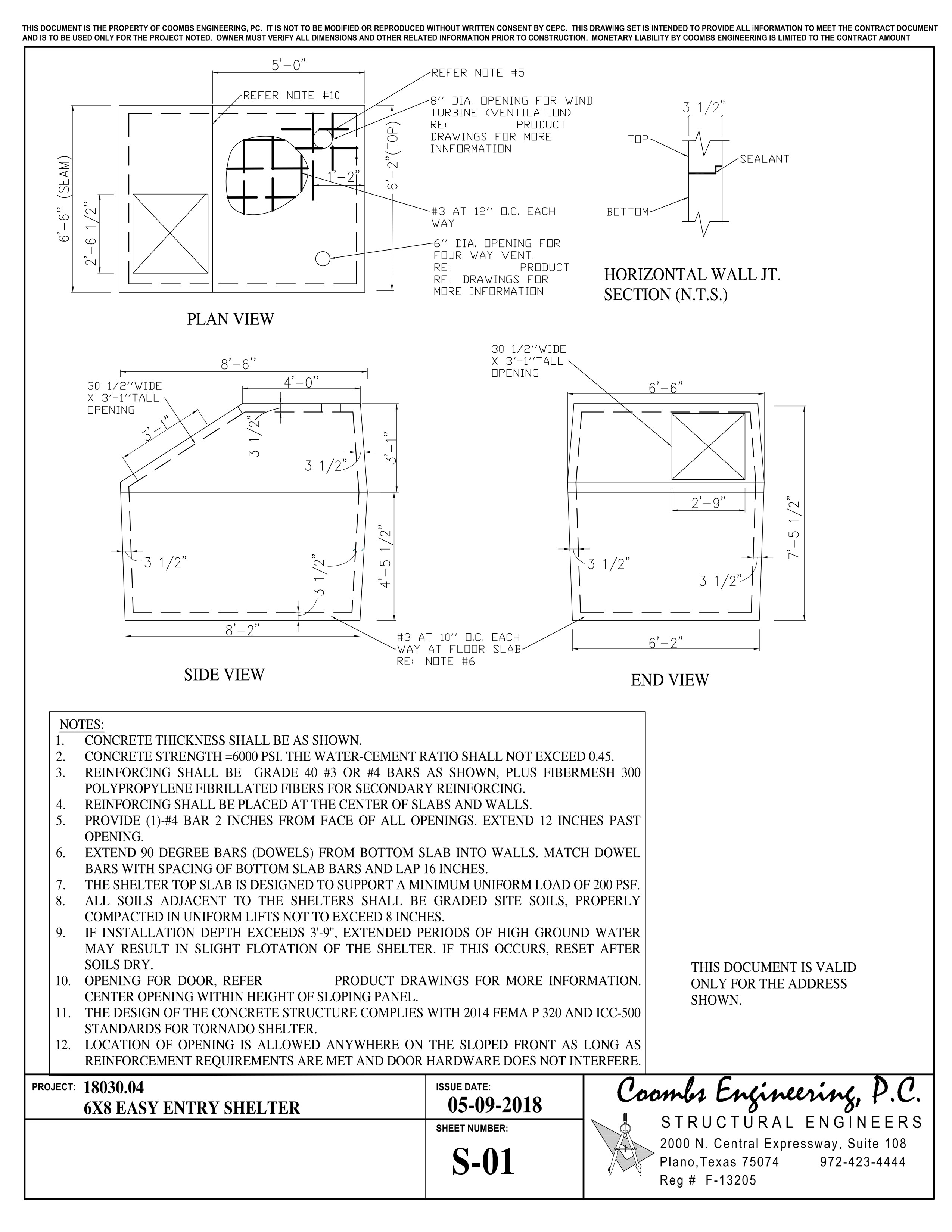
Drawings by Coombs Engineering, P.C. (Texas Reg. F-13205). Manufacturer contact details have been removed. Bring these to your city or county if a permit is required.
What the drawings say
| Item | From the drawings |
|---|---|
| Concrete strength | 6,000 PSI, water-cement ratio 0.45 or less |
| Reinforcement | Grade 40 #3 or #4 steel bars plus polypropylene fibers |
| Walls and slabs | 3½″ thick |
| Roof design load | At least 200 lbs per sq ft, uniform |
| Ventilation openings | 8″ for a wind turbine vent, 6″ for a four-way vent |
| Construction | Two pieces joined at a horizontal wall joint with sealant |
| Design standard | Concrete structure complies with 2014 FEMA P-320 and ICC 500 standards for tornado shelters |
| Footprint | 8′6″ × 6′6″ (both models) |
| Overall height | 6′10½″ The Original · 7′5½″ EZ Entrance |
| Inside height | 6′2″ The Original · 6′9″ EZ Entrance |
| Door opening | 30½″ × 37″ The Original · 30½″ × 46″ EZ Entrance |
What FEMA P-320 and ICC 500 mean
ICC 500 is the national standard for designing and building storm shelters. FEMA P-320 is FEMA's guide to building a safe room for your home. Both are built around tornado wind speeds of up to 250 mph and the flying debris that comes with them.
FEMA doesn't test, certify or approve individual shelters. When a company says "FEMA approved," ask what they mean, and ask to see the engineering.
You can't rewind a storm
Be the house that's ready.
See your exact installed price in about a minute. Pick a shelter, type your address, and see one installed price.